
The Call That Starts With "It Was Fine Until We Turned Up the Force"
A technician gets this call a lot: the garage door started reversing on its own, or it wouldn't fully close, so someone popped open the opener's control panel and cranked the force dial up until the problem "went away." Weeks later, the door is slamming into the floor, the opener motor is straining, or a bent track is dragging the rollers. The spouse who turned the dial thinks they fixed it. The spouse who didn't touch it thinks they broke something. Neither is entirely wrong — the force setting masked a mechanical problem instead of solving it, and now both issues need attention.
What Force and Travel Limits Actually Are
Every garage door opener has two basic settings that control how it behaves, even though most homeowners never touch them after installation.
- Travel limits tell the opener exactly where the door should stop — fully open, and fully closed. Set correctly, the door seats against the floor without slamming and opens to a consistent height without grinding the top of the track.
- Force settings tell the opener how much push or pull to use to get the door through that travel. This is the opener's safety margin — how hard it will work before deciding something is blocking the door and reversing it.
Think of travel limits as the destination and force as how hard the opener is allowed to push to get there. Both exist to protect people, pets, and the door itself.
Why Cranking Up the Force Causes Damage
When a door reverses unexpectedly or won't close, the force setting is rarely the real problem — it's usually a symptom of something mechanical that's making the door harder to move than it should be:
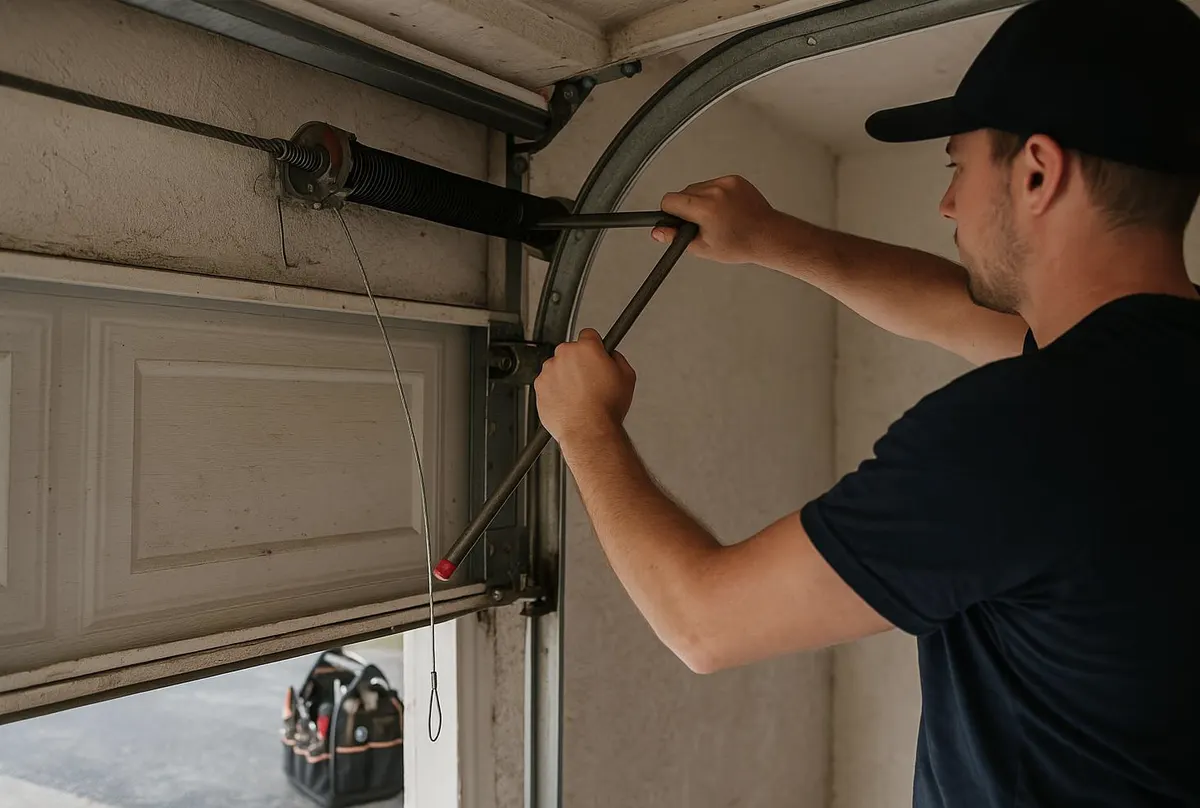
- Weakened or unbalanced springs that no longer counterweight the door properly, so the opener has to do more work than it was designed for.
- Dry or gritty rollers and hinges creating friction the opener has to fight through on every cycle.
- A slightly bent track or loose bracket that catches the door partway through its travel.
Turning up the force doesn't fix any of that. It just tells the opener to push harder against resistance it was never meant to overcome. Over time this strains the motor and gears, stresses the opener's drive system, and — because the safety reversal threshold is now set too high — can let the door come down with real force on anything underneath it, including a hand, a pet, or a parked bike. It also accelerates wear on the exact parts that were struggling in the first place, so the underlying problem gets worse while the opener works overtime to compensate.
Where Desert Conditions Make This Worse
Las Vegas heat doesn't cause bad force settings, but it speeds up the mechanical wear that leads to them. Factory grease and lubricant on rollers, hinges, and the opener's drive screw or chain break down faster in extreme summer heat, leaving metal-on-metal friction that the opener has to push through. Big day-to-night temperature swings make metal components expand and contract, which can gradually shift a track out of true alignment. A door that moved smoothly in spring can be noticeably harder to open by late summer — and if the force gets cranked up to compensate instead of addressing the friction or alignment, the opener is fighting a losing battle every single cycle.
Signs Your Settings Don't Match Your Door
- The door reverses before fully touching the floor, or doesn't reverse at all when something is in its path.
- You hear the motor straining or laboring partway through a cycle.
- The door closes with a hard bang instead of settling down gently.
- The opener runs noticeably longer or louder than it used to.
The Safe Way to Test, Not Adjust
Before anyone touches the dials, place a roll of paper towels flat on the ground where the door closes and run the door down onto it. A properly set door should reverse immediately on contact. If it crushes the roll or keeps going, the force is set too high for current conditions — and the real fix is finding out why the door needs that much force in the first place, not leaving it there.
When to Call Las Vegas Overhead Garage Door
If your door is reversing unpredictably, slamming, or the opener sounds like it's working too hard, that's worth a real diagnosis rather than another dial adjustment. Our technicians check spring balance, track alignment, and roller condition as part of garage door maintenance, and if springs are worn out from the heat and wear cycle, spring replacement restores the balance the opener needs to work the way it was designed to — without relying on force settings to compensate.
If your opener or door in the Las Vegas valley is fighting itself, call Las Vegas Overhead Garage Door and we'll find out why.