
Short answer: your garage door is almost certainly the weakest point in your home's exterior
It's the largest moving opening in most homes, built from thin steel or aluminum panels, and held in place by rollers, tracks, and springs rather than the solid framing that surrounds every other wall. When wind pressure builds against a house, it looks for the path of least resistance. In a lot of Las Vegas homes, that path is the garage door. If it buckles or blows inward, the whole structure loses pressure integrity and the risk to the roof and walls goes up sharply.
Why this matters right now
Late-season monsoon moisture is still capable of kicking up sudden downburst winds and dust, and as the weather pattern shifts into fall, the valley starts seeing the wind events that come with passing storm fronts and big day-to-night temperature swings. After a summer of 100-plus degree heat, garage door hardware has usually taken a beating: lubricant has cooked off, rubber seals have dried and shrunk from UV exposure, and metal fasteners have expanded and contracted enough times to work themselves loose. That's exactly the hardware that's supposed to hold the door together when wind hits it broadside.
What actually fails first
- Rollers and tracks: Heat-dried lubricant means more friction, which means more strain on the rollers. A door that's sticking or jerking during normal use will fail faster under wind load.
- Track brackets: The brackets holding the track to the frame loosen over time from thermal cycling. Loose brackets let the whole track flex when the door is pushed, which lets panels pop out of alignment.
- Weatherstripping and bottom seal: Dried, cracked seals don't just let in dust and rain; they also let wind-driven pressure get up under the door more easily.
- Panels with existing dents: A dent from a bumped car or a stray rock isn't just cosmetic. It's a weak spot where steel is more likely to buckle under load.
A practical pre-wind-season checklist
- Inspect the tracks. Stand inside the garage with the door closed and look for gaps between the rollers and the track, visible rust, or bent sections. Tighten any loose lag screws on the brackets.
- Check the panels. Run a hand along seams and look for separation, dents, or rust-through, especially near the bottom panel where splash and dust collect.
- Test the auto-reverse safety feature. Place a 2x4 on the ground where the door closes. It should reverse on contact. This matters for wind safety too, since a door with a worn opener may not seat and lock properly.
- Re-lubricate rollers, hinges, and springs with a silicone-based lubricant rated for high heat. Avoid heavy grease, which attracts dust and grit that's common after a dry summer.
- Replace cracked weatherstripping along the bottom and sides before storms arrive, not after.
- Know your opener's backup power situation. Wind storms often bring power outages. If your opener doesn't have battery backup, you may be stuck with a manual release during the exact moment you need the door secured.
A trade-off worth knowing about: reinforcement vs. replacement
If your door is older, a lighter-gauge builder-grade model, or already shows panel damage, retrofitting it with horizontal reinforcement struts and heavier track brackets can buy real wind resistance for a modest cost, typically in the low hundreds of dollars range. A full wind-rated or impact-rated door is a bigger investment, usually several thousand dollars depending on size and material, but it's the stronger long-term answer if the current door is near the end of its life anyway. Reinforcing an otherwise sound door is usually the more practical move; replacing a door that's already struggling with alignment or rust is usually the smarter one.
When to call Las Vegas Overhead Garage Door
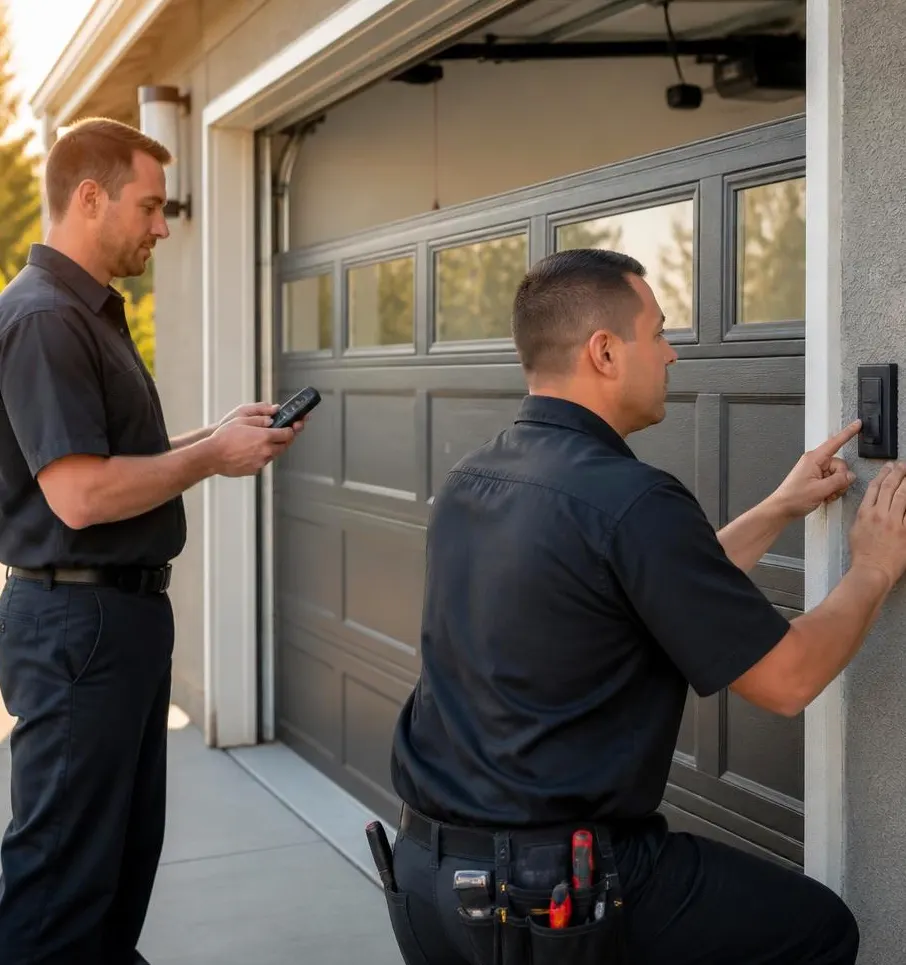
If your door is sticking, sagging on one side, or you've found loose track hardware you're not comfortable adjusting yourself, that's the point to call in a technician rather than wait and see how it holds up in the next windstorm. Our Garage Door Maintenance service covers a full inspection of tracks, rollers, springs, and seals, plus the lubrication and adjustments that undo a summer's worth of heat damage. If we find a weakened spring or a track that's bent beyond simple tightening, our Spring Replacement and repair work gets the door back to full strength before wind season tests it.
If you're in Las Vegas, Henderson, North Las Vegas, Summerlin, Spring Valley, Enterprise, Paradise, or Boulder City and want your garage door checked before the next wind event rolls through, call Las Vegas Overhead Garage Door today and get it handled right.